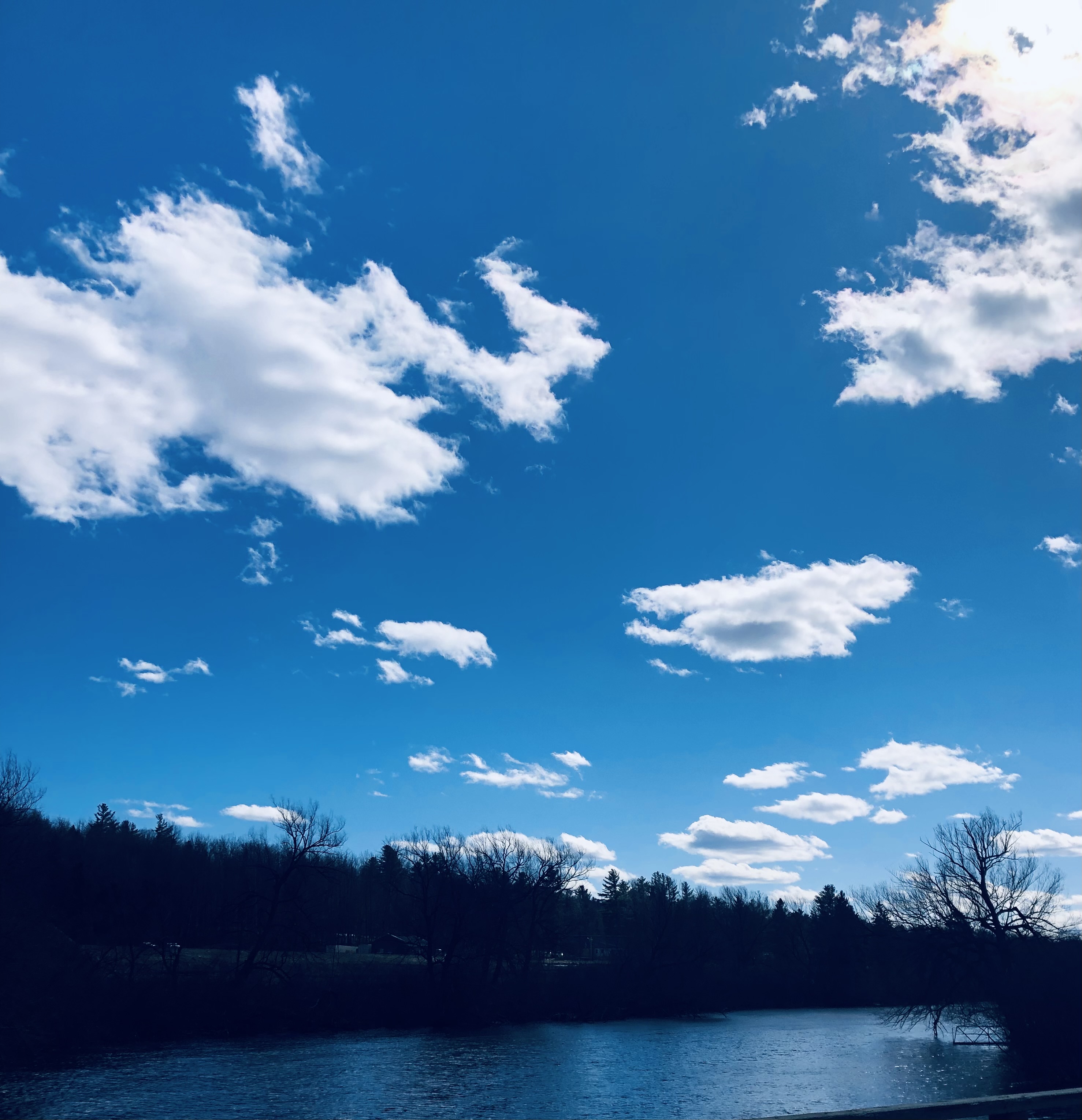
March offers bright days after our sunlight-deficient winter
Let there be light. That biblical exhortation is the deepest wish of many Townshippers these days. Light and life are often conjugated. Light means joy, fulfilment, happiness.
From mid-November to late January, however, sunset here already looms shortly after 3:45 pm … ouch. That darkness is the murky edge of winter that I dislike.
In Norway, it’s called mørketiden – the dark time in the weeks before and after winter solstice, usually on Dec. 20-21.
Snow? That’s fine with me. We had deep piles of snow this winter and I was OK with it. Our snowplough service piled it up 12 feet deep behind the garage. Impressive.
Actually, I am also cool (so to speak) with February: it’s often cold but also bright. February can be blindingly sunny; ask any skier. Iwent skating in North Hatley on Sunday the 15th, at the exact midpoint of February, a sunny day with a perfectly smooth ice surface. Beautiful. That outdoor skating season pretty much ended by March 4th, as milder temps suddenly returned.
Ominous feelings
As a child, I didn’t notice the darkness much. Tweens and teens were always out skating, tobogganing and playing shinny.
In recent years, however, it has become a personal issue. Maybe age makes you more sensitive to the shorter days, an ominous feeling that there is less time available. As if gasping for air.
So, this winter we monitored the daylight closely. After the installation of a new spotlight on our garage, we started to check the exact time it flashed on, prompted by darkness. On Boxing Day, Dec. 26, it self-illuminated at 4:15 pm.
Then over the weeks, as the onset of darkness retreated, we steadily gained a minute and a half of extra daylight every afternoon. Each day we would record the precise time of the light flashing on: 4:22, 4:44, 4:59. Then on Jan. 27, 5 pm! Onward to 5:30 on Feb. 25, and eventually to almost 6 pm on March 4.
Gradually, evening starts again at … evening. And in March, we will quickly gain close to two hours more of daylight, counting the clocks that spring forward with Daylight Saving Time on Sunday, March 8. What a relief.
Despite this painfully slow march back to daylight, unlike many Canadians I have never felt the need to urgently escape to the south. I have been to Florida and Cuba several times. I liked it; it’s great walking around in Fort Lauderdale at a steady 80F degrees, or touring Havana in the sunshine. But I quickly get bored with beaches and somehow feel comfortable returning to winter land with its long evenings and Canadiens broadcasts.
Life in Canada means darker afternoons. At least until mid-March.
Light means health
One side-effect of less light can be depression or listlessness. SAD, or seasonal affective disorder, is thought to be caused by lack of light. It is a form of depression that coincides with winter closing in.
SAD was first described and named in 1984 by Norman E. Rosenthal and colleagues at the U.S. National Institute of Mental Health. As an information bulletin by the prestigious Mayo Clinic states:
“If you’re like most people with SAD, your symptoms start in the fall and continue into the winter months, sapping your energy and making you feel moody. The specific cause of seasonal affective disorder remains unknown.
“Some factors that may come into play include:
- Your biological clock (circadian rhythm): The decrease in sunlight may disrupt your body’s internal clock and lead to feelings of depression.
- Serotonin levels: A drop in serotonin, a brain chemical (neurotransmitter) that affects mood, might play a role in SAD. Reduced sunlight can cause a drop in serotonin that may trigger depression.
- Melatonin levels: The change in season can disrupt the balance of the body’s level of melatonin, which plays a role in sleep patterns and mood.”
Symptoms of SAD may include: oversleeping; appetite changes, especially a craving for foods high in carbohydrates; weight gain; and tiredness or low energy.
Researchers have taken this health challenge seriously. New diagnoses now suggest ways to avoid SAD.
As the Associated Press reports: “Scientists are learning how specialized cells in our eyes turn the blue wavelength part of the light spectrum into neural signals affecting mood and alertness. Sunlight is loaded with the blue light, so when the cells absorb it, our brains’ alertness centers are activated and we feel more awake and possibly even happier.”
Researcher Kathryn Roecklein at the University of Pittsburgh tested people with and without SAD to see how their eyes reacted to blue light. As a group, people with SAD were less sensitive to blue light than others, especially during winter months. That suggests a cause for wintertime depression.
Until there is a remedy, maybe money is the best cure. Wealthy, social-democratic Norway sends some acute sufferers south to the Mediterranean to recover!
March marches in
Spring eventually arrives, however. Environment Canada makes a distinction about March seasons:
“Spring has two start dates. Meteorological spring is determined by the annual temperature cycle and aligns with our calendar year, starting on March 1 and lasting until the end of May.
“Astronomical spring, often referred to as the first official day of spring, is determined by Earth’s relationship with the Sun. This year, the season runs from March 20 and ends on June 21, when the summer solstice begins.”
This March, forecasts private agency Météo Canada, Sherbrooke skies will not be terribly bright. There will likely be many cloudy days as well as 20 days with snowfall. But unlike the wintry spring of 2025, when snow kept piling on through April, the average +4C temperatures forecast this March will be mild enough to limit our snow piles.
Cheers to long, sunny evenings! We have earned them.
Originally published i the Sherbrooke Record weekend supplement, March 7, 2026
