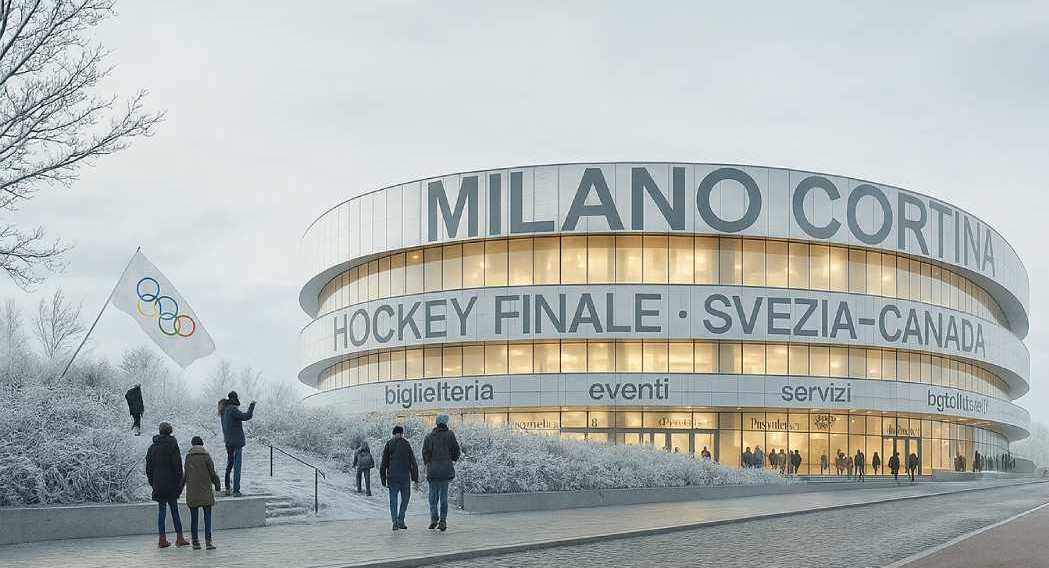
Would a hockey win calm a country worried about its sovereignty?
Yes, it’s back! Top-level international hockey always sparks passion among Canadians. As with Brazilians during the football World Cup, national-team victories offer an affirmation of the country, despite our many doubts. Winning is our declaration of independence.
The Winter Olympics at Milano-Cortina this month could be packed with such peak moments.
In 1972, Canada stopped —everything — for a showdown with the upstart Soviets. The scene was astounding: traffic disappeared, Bay Street was frozen, and sports bulletins interrupted radio and TV programs. My high-school classes were suspended as Canada-Soviet games blasted out over loudspeakers.
And that excitement lasted. The legacy of 1972 (“Henderson scores!”) has been celebrated through TV series, documentaries and memorial events of all kinds. As one cousin said to me in 2012 about the many Tim Horton’s and Canadian Tire promotions during that summit anniversary: “I enjoyed the series back in 1972 … but never thought we’d be talking about it 40 years later.”
Millennials and Gen Z folk who barely knew Wayne Gretzky and never saw the Canada Cup still know that the 2026 Olympics could be big. —But will it make the country happy again?
Top-gun role for Canada
Canada has enjoyed tremendous good luck in top international series. The country’s pro stars have played like stars: first Phil Esposito, then Bobby Orr, Wayne Gretzky, Mario Lemieux, Sidney Crosby, Carey Price and finally Connor McDavid have all played peak hockey when it counted. Big-game victories and golden goals are expected.
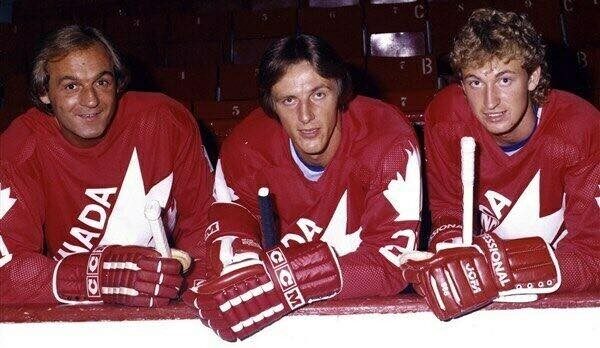
Top NHL scoring stars such as Guy Lafleur, Mike Bossy and Wayne Gretzky have typically adorned Team Canada
Since 1972, Canada has won most such showdowns, establishing ourselves as the eternally competitive Brazil of hockey, even as countries such as Russia and the U.S. rise and fall, then perhaps rise again.
Team Canada has endured several bad results – notably the 1981 Canada Cup loss to the Soviets, the American triumph at the 1996 World Cup final (held, ironically, in the newly opened Molson (now Bell) Centre), followed by the Olympic humiliation of our NHL pros in 1998 and 2006. Each such loss has led to national soul-searching.
But we always recovered and doggedly pursued the top-gun role again.
Count your blessings, Canada — England soccer fans are still clinging to the 60-year-old glory of their 1966 World Cup. That win has been followed by an unbroken trail of flops and near misses at later Euros and World Cups. Heartbreak has become routine despite the standout efforts of Premier League stars such as David Beckham, Wayne Rooney and now Harry Kane.
Given this, the London Independent newspaper concludes that losing “suits” England, pointing to its footballers as icons of heroic failure. This creates a national spirit that “blends humour, stoicism, and a sense of being perpetually unlucky—almost a cultural coping mechanism.”
A recent AI summary adds that “England has, in some ways, embraced losing as part of its sporting identity.”
Luckily for Canadians, Henderson did score – and we have kept winning — or our country today might be treated as just the 51st state. Ha.
Change of rivals
Coincidentally, the U.S. is now our most compelling rival, producing many more NHL-level players. In 2025-26 about 400 NHLers are Canadian, while the U.S. has generated 266 such pros, reports the QuantHockey site.
The rapid growth of hockey across the U.S., even in Sunbelt states, means Americans are likely to dominate hockey some day, intermittently at least, despite their most recent Olympic final losses to Canada in 2002 and 2010.
The 4-Nations tournament of February 2025, again won by Canada, did not include Russia, hence it lost some of that tangy competitive sauce. Team Russia is still banned at these Olympics after doping charges.
This absence rules out high-level, ideology-tinged clashes echoing the 1975 New Year’s Eve game between the Montreal Canadiens and the Central Red Army club of the Soviet Union. The so-called “greatest game ever” ended in a 3-3 draw, a thriller the Putin era is unlikely to witness again. As long as my DVD player still works, however, I can always dust off that game video and try to figure out who really was the world’s best.
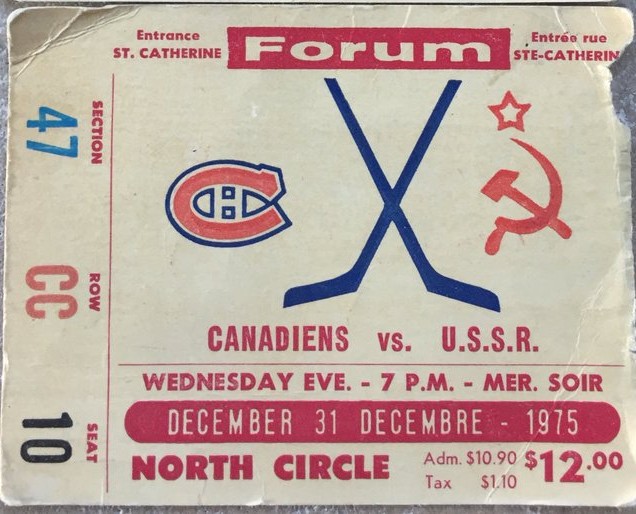
Hockey summit games in the 1970s were ideologically charged and often de facto world championships.
This month, women’s and men’s Olympic hockey will be played in northern Italy. I attended the winter Games held at Torino in 2006. That tournament still featured the Big Six of men’s hockey: Canada, Russia, the U.S., Sweden, Finland and Czechia, with Switzerland and Germany elbowing upward. Other countries may rise in this year’s competition.
Hockey is not immune to broader social forces, notably identity politics, demands for inclusiveness and other sports-world changes.
“Hockey” generally meant men’s competitions until early this century, even if women’s hockey has been played since the 1880s. Today, female teams are booming on professional and international circuits. They joined the Olympics in 1998. Canadian and American women have repeatedly faced off in the finals. Even the official 2026 Olympics site states flatly: “History suggests another Canada–U.S.A. final is the most likely outcome.”
(The puck was supposed to drop on Feb. 5 for the women’s tournament, with Canada challenging Finland. But a rare norovirus outbreak among the Finns caused that game to be postponed to Feb. 12.)
An opposing personnel trend is the evaporation of Quebec and French-Canadian content on top-level Canadians teams. Previous world tilts have starred Yvan Cournoyer, Serge Savard, Mario Lemieux and Martin Brodeur. Secondary roles have been played by the likes of Franco-Ontarian Jean-Paul Parisé, and Roberto Luongo, a north-end Montrealer.
In 2026, however, no francophone earned a spot on Team Canada. This is ominous for Quebec hockey development, as it followed the World Junior championship in December/January when just one Quebecer, Caleb Desnoyers, played for Canada.
“Quebec has fallen from Canada’s second-largest NHL talent supplier to near the bottom on a per-capita basis. The province currently has no players among the league’s top 100 scorers and just one active goaltender”, reports the RG sports-data site.
However, it is worth noting that the women’s Team Canada maintains a full French complement with 6 of 22 players coming from Quebec .
While these up-and-down personnel trends grab headlines today, hockey has absorbed social and political changes for a century and still thrived. Let’s hope Milano-Cortina keeps the surprises coming.
And, go Canada. Especially vs the USA.
This article originally appeared in the Sherbrooke Record’s weekend supplement, Feb. 6, 2026.
